If you have looked at our pricing page, you have seen a line that reads “MUSE upgrade.” It is a real term from the research literature, it is one of the more interesting areas of stem cell science right now, and it is also a term that gets used loosely in marketing. This article explains what it means — and, just as important, what is still unsettled.
What Muse cells are
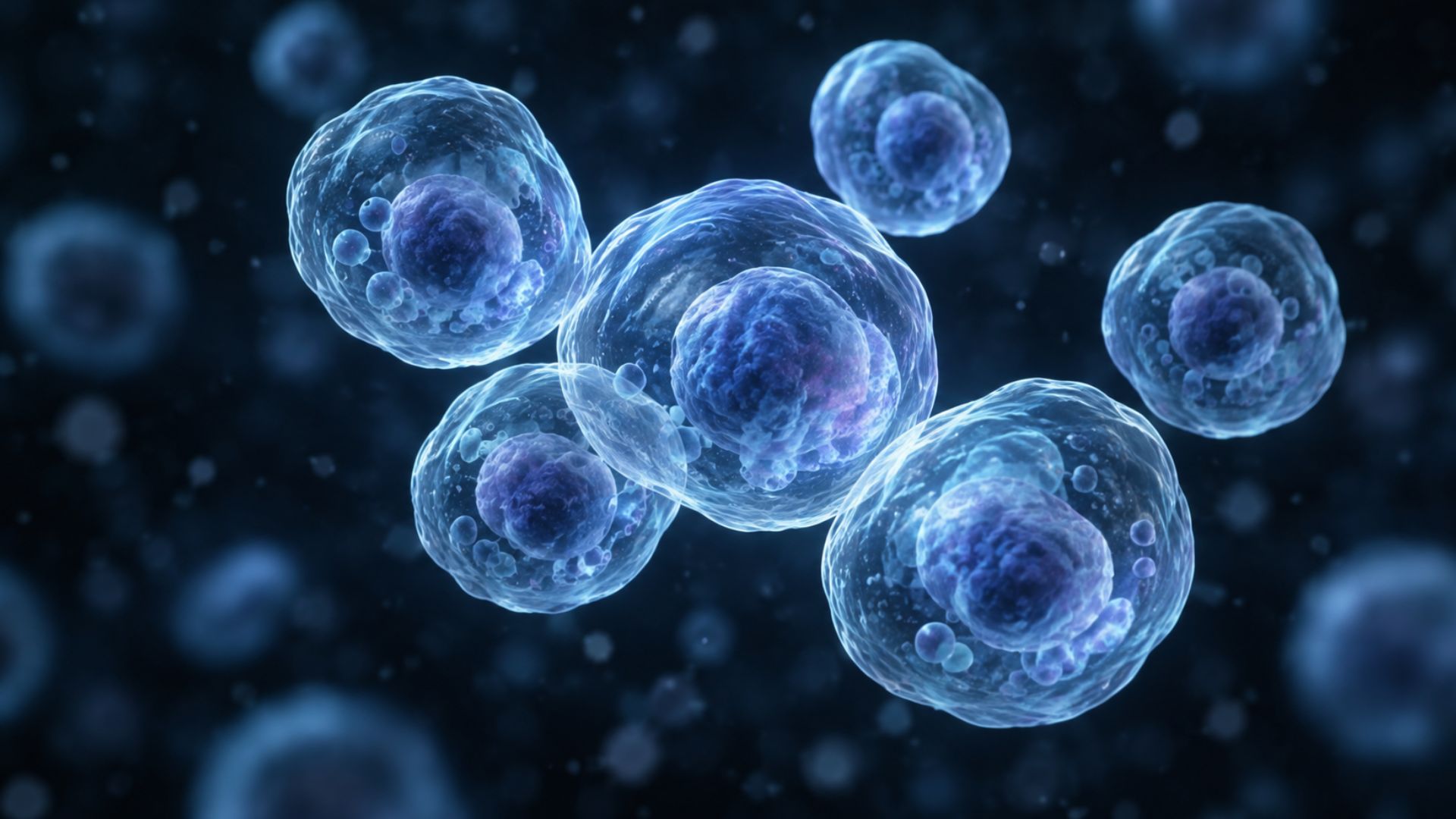
Muse stands for multilineage-differentiating stress-enduring. The name describes what researchers observed: a small subpopulation of cells within mesenchymal tissue that survived a stress condition in the lab — prolonged exposure to an enzyme — that most cells did not, and that afterward showed the ability to differentiate into more than one cell lineage.
They were first described in 2010 by Dr. Mari Dezawa and her group at Tohoku University in Japan, who isolated them from human bone marrow. Since then, research groups have reported finding them in bone marrow, in peripheral blood, and in the connective tissue of many organs. They are identified in the lab by a surface marker called SSEA-3.
What the research is exploring
The reason Muse cells draw attention is that researchers have reported properties that would be unusual for an adult cell: the ability to differentiate into cells from all three embryonic germ layers, and — in animal studies — a tendency to migrate toward damaged tissue, without forming the tumors that true pluripotent stem cells can form. Reviews published in 2023 and 2024 summarize a body of preclinical work and early clinical research, much of it in Japan, investigating these properties.
That is what is being studied. It is not what has been established for patients.
What remains debated
This is the part most clinic pages leave out, so we will not. A 2025 systematic review of the Muse cell literature notes that while studies report multilineage differentiation and tissue repair, the population’s existence as a distinct cell type and the extent of its pluripotency remain debated, and that standardized criteria for defining these cells have not yet been settled.
In plain terms: serious researchers find this cell population promising, and serious researchers also disagree about how to define it and how much of what has been reported will hold up. Both of those are true at the same time. Any clinic that presents Muse cells as a proven upgrade with a known effect is ahead of the science.
What the MUSE upgrade at Stem Cell RX is
Our MUSE upgrade is offered as an additional $1,000 option on a treatment plan, when your provider determines it is appropriate. It is priced openly and itemized like everything else we offer. At your consultation, your provider will explain exactly what the upgrade consists of, how it is sourced and documented, and whether it makes sense for your plan — and you will see the line and the number before deciding anything.
We will not tell you it does something the research has not established. We offer it because the research is genuinely interesting, some patients want the option after understanding it, and we would rather offer it transparently than pretend the term does not exist.
Muse cells and MSC products are not FDA-approved to treat, cure, mitigate, or prevent any disease. The properties described here are the subject of ongoing research and have not been established as treatment effects in patients. Individual results vary. A licensed clinical provider determines whether any option is appropriate for you.
Questions to bring to a consultation
- What does the MUSE upgrade actually consist of, and how is it documented?
- Is it appropriate for my plan, or is it being offered because it is available?
- What does the research say, and what does it not say yet?
- What is the itemized price, and what changes if I decline it?
Every patient must complete a clinical evaluation with a licensed healthcare professional to determine whether therapy is appropriate. Treatment is not recommended for all individuals.
Frequently asked questions
- Are Muse cells FDA-approved?
- No. Muse cells, like other MSC products, are not FDA-approved to treat, cure, mitigate, or prevent any disease.
- Are Muse cells proven to work?
- No. Researchers have reported interesting properties in laboratory and animal studies and in early clinical research, but a 2025 systematic review notes that the population’s existence as a distinct cell type and its full pluripotency remain debated. Nothing about Muse cells has been established as a treatment effect in patients.
- What does the MUSE upgrade at Stem Cell RX cost?
- $1,000, added to a treatment plan only when your provider determines it is appropriate. It is itemized on our pricing page.
- Should I get the MUSE upgrade?
- That is a question for your consultation. Your provider will explain what it consists of and whether it makes sense for your plan. You are never sold it by default.
Keep exploring Stem Cell RX
- What MSC stem cells areMuse cells are described as a subpopulation of these.
- Where the cells come fromCell sources, explained as process.
- See the MUSE upgrade on our pricing page$1,000, itemized, when your provider determines it is appropriate.
Independent sources
- Multilineage Differentiating Stress Enduring (Muse) Cells: A New Era of Stem Cell-Based Therapy (2023 review)Peer-reviewed overview of Muse cell research, including their 2010 discovery.
- Isolation and characterization of human Muse cells: a systematic review (2025)Notes that the population’s existence and full pluripotency remain debated.
- FDA — Consumer Alert on Regenerative Medicine ProductsRegulatory context: none of these products are FDA-approved for the uses marketed by clinics.